Bios you can copy, photographs you can use, and the facts in the
spelling she uses. For interviews, background or comment, the press line is at
the bottom of this page.
How to introduce her
Three lengths. Copy the one that fits the space you have.
One line
Julie Wenah is a civil rights lawyer and technologist who designed the governance for privacy-preserving racial-bias measurement at Airbnb and Meta.
18 words
Short
Julie Wenah is a civil rights lawyer and technologist. At Airbnb and Meta she designed the governance for systems that measure racial bias without exposing the people being measured, and she was a named expert contributor to the Partnership on AI’s study of Apple’s privacy-preserving fairness checks. Her government work spans NASA, the Obama White House, the Department of Commerce, and the FCC. She chairs the Digital Civil Rights Coalition and is an award-winning filmmaker.
67 words
Full
Julie Wenah is a civil rights lawyer and technologist who works on how AI and biometric systems get measured, governed, and held accountable. She took a Bachelor of Science in Political Science from Lamar University, a law degree from Texas Southern University, a master’s from Georgetown and a certificate from Harvard Law School Executive Education, and was admitted to the Texas Bar in 2013.
Her government and technology careers began together. In 2009 she was a Legal Fellow at NASA’s URC Center for Bionanotechnology, supporting experiments that flew on the STS-129 shuttle mission. She went on to the Obama White House, where she vetted nominees for presidential boards and commissions and worked in the Office of the First Lady, and to the Department of Commerce as Counselor and Policy Advisor, contributing to the Administration’s 2014 Big Data report. She was later appointed to the FCC’s Communications Equity and Diversity Council, co-chairing the Innovation and Access Working Group.
At Airbnb she was Community Senior Counsel and Acting Regional Counsel for Africa, and designed the governance for Project Lighthouse, the award-winning system built with civil rights organizations to measure racial gaps in bookings without storing perceived race next to anyone’s identity. At Meta she was Associate General Counsel and Product & Accessibility Lead for Civil Rights, designing the governance for race data measurement and creating Project Height, an equity framework for product teams named for Dorothy Height. She was a named expert contributor to the Partnership on AI’s 2023 paper Eyes Off My Data.
She chairs the Digital Civil Rights Coalition and is building a company that helps product teams catch discrimination risk before launch. She has spoken at the White House, the World Economic Forum in Davos, Ghana’s Ministry of Foreign Affairs, the University of Tokyo and the National Bar Association.
301 words
The facts
The spelling and the titles she uses.
Name
Julie Wenah
Pronounce
WEN-nah
Titles
Civil Rights Lawyer · Technologist · Filmmaker
Also
Chair, Digital Civil Rights
Coalition. Founder of a company that helps product teams catch discrimination risk before launch.
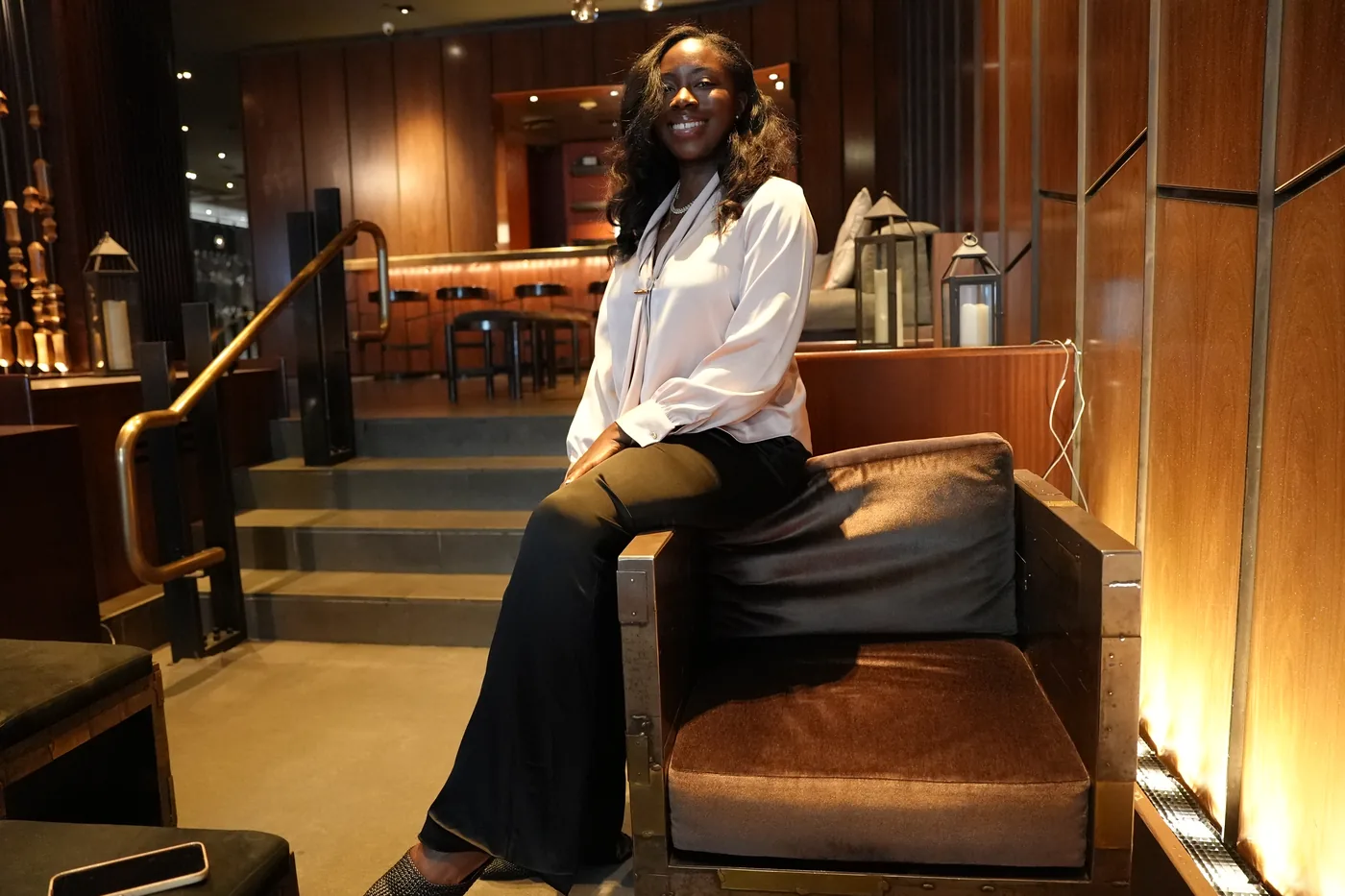
Web resolution, cleared for editorial use alongside a piece about her.
Print resolution on request.
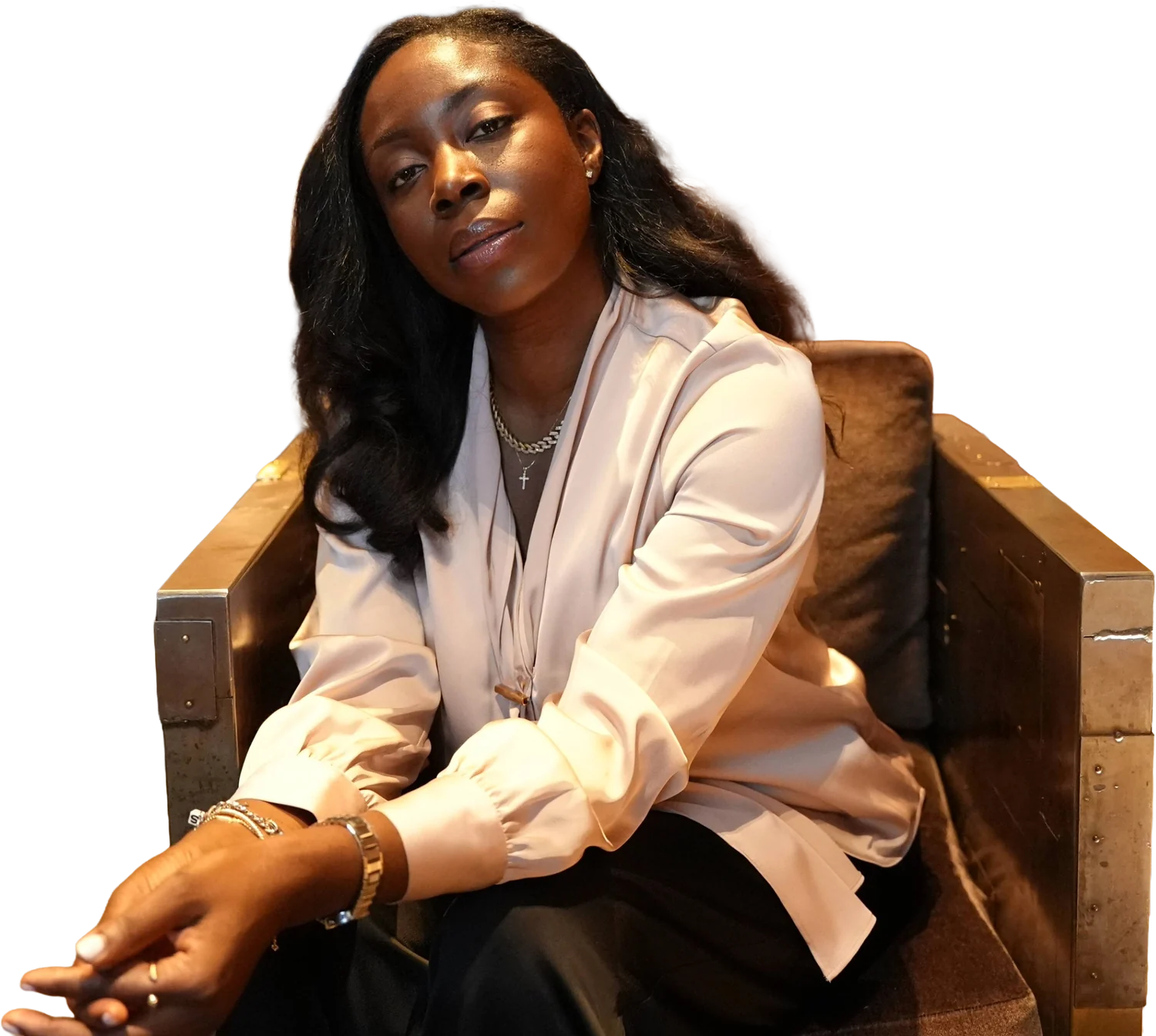
Portrait, seated
Color. The image used across the site.
DownloadPrint resolution on request
Portrait, second look
Color. The photograph the home page uses.
DownloadPrint resolution on request
The mark
Use it on a dark ground, with clear space around it.
DownloadVector on request
Rooms she has been in
A selection, for context. The full record is on the
About page.
The White HouseFacial recognition, Eisenhower Executive Office Building, 2024
World Economic ForumHCL Technologies at Davos, 2024
Congressional Black CaucusBriefing on biometric policy, Washington DC, 2024
Ghana’s Ministry of Foreign AffairsAccra, 2025
University of TokyoJapan’s academic AI leaders, 2025
National Bar AssociationEmerging technology and digital civil rights, 2019
Human Tech WeekTraining for the careers of tomorrow, 2026
Martha’s VineyardThe power of networks, 2026
The technical papers belong to the organizations that published them, Airbnb,
Meta and the Partnership on AI; please describe Julie’s role as listed on the
Writing page. The toolkits and convenings should be credited to the
Digital Civil Rights Coalition, which she chairs.
For interviews, background briefings or comment on biometric and algorithmic policy,
write to her.
Ask about Julie
You’re talking to an assistant, not to Julie. It answers from what
this site says about her work and will tell you when it doesn’t know. Anything that
needs her goes straight to her.


 Ask about Julie